Quicksearch Your search for coding returned 37 results:

AI-Powered Browsers

AI-powered browsers are reshaping how we interact with the web. They are moving us from a more passive browsing to hopefully more intelligent browsing by using these task-completing companions.

The 3 big names are:
Microsoft Edge, which uses ChatGPT (OpenAI) in its Copilot. The sidebar assistant is for writing, summarizing, and answering questions across sites
Google Chrome has its own Gemini AI for enhanced search, writing help, and experimental tab organization.
Opera One is not as popular, but its Aria (also powered by OpenAI) for in-browser assistance for coding, content generation, and web Q&A.

There are also some smaller, less well-known browsers using AI, such as Brave, Arc Browser, Perplexity Comet etc.

The underlying technologies vary. Large Language Models (LLMs) are used by most browsers using models like GPT-4, Claude, or Gemini to power natural language understanding and generation.

Agentic AI browsers, like Comet and Dia, go beyond chat and perform multi-step tasks like booking flights or managing emails autonomously.

Advanced browsers maintain memory across tabs and sessions. This context awareness enables smarter comparisons and task continuity.

Brave’s Leo and SigmaOS emphasize local processing and anonymity, avoiding cloud-based data sharing, and these privacy enhancements should be encouraged across all browsers. As these browsers become more autonomous, they face risks like prompt injection attacks, where hidden commands in web content can trick the AI into executing unintended actions.

Podcasting and iTunes U

iTunes U user at NJIT

Podcasts at Apple are turning 20 years old, but Apple officially discontinued iTunes U at the end of 2021. The platform, which launched in 2007, was designed to help educators distribute lectures, assignments, and other learning materials through the iTunes ecosystem. It was especially popular with universities and K–12 institutions - for a time.

As Apple shifted its focus to newer tools like Classroom and Schoolwork, which offer more interactive and integrated experiences for iPads and Macs, iTunes U gradually became outdated. Apple announced the phase-out in 2020, giving educators time to transition to an alternative platform. That was partially why there was a temporary bump up in schools participating in MOOCs. 

NJIT iTunes U

I was at NJIT 20 years ago and spearheaded the university's inclusion in the initial "sweet 16" schools in iTunes U. It was important in its time, and I would update the new schools as they were added. I was disappointed in Apple's lack of support for the academic version of podcasting and was further disappointed when they dropped it after 14 years, but it had been losing its lustre. iTunesU (and iTunes itself) didn't really move forward, and the newer apps for educators allowed us to guide students through lessons in real time, share assignments, and track progress more efficiently. 

I searched for some of those old Serendipity35 iTunes U posts. Very nostalgic in 2025.

These are some of the general online learning platforms where some of that content was repurposed.
Khan Academy – Free, nonprofit platform offering lessons in math, science, economics, and more. Great for K–12 and beyond.
Coursera – Offers courses from top universities like Stanford and Yale. Many are free to audit, with paid certificates available2.
Udemy – A massive marketplace for courses on everything from coding to photography. Often discounted and self-paced.
FutureLearn – UK-based platform with university-led courses and microcredentials.
Institutional Tools
Canvas LMS and Blackboard Learn – Widely used by schools and universities for managing coursework, assignments, and communication.
Moodle – Open-source learning management system used by many institutions worldwide.
Open Educational Resources
Wikiversity and Wikibooks – Free educational content created and curated by volunteers. Great for self-learners.
Classroom & Student Engagement
ClassDojo – Focuses on classroom behavior and communication, especially for younger students.
Remind - Helps teachers communicate with students and parents via messaging.
Lumio – Turns lessons into interactive, collaborative experiences.


Begin. End. The Waning Days of Coding

code on screen

A piece in The New Yorker (not exactly a technology magazine) titled "A Coder Considers the Waning Days of the Craft," set me thinking about what tech careers will be lost in the near and far future. Yes, artificial intelligence plays into this, but there are other factors too. Coding seems to be a likely candidate for being on the decline.

The author, James Somers, says that, "Coding has always felt to me like an endlessly deep and rich domain. Now I find myself wanting to write a eulogy for it." With his wife pregnant, he wonders that "...by the time that child can type, coding as a valuable skill might have faded from the world." 

It is an interesting read. Kind of a memoir of a coder.

Schools still teach coding. Coders are still working. The question is for for how long? Should a student in middle school think about it as a career? I used to tell my middle school students that a lot of them will go into careers that have titles that don't exist today. Who can predict?

Somers concludes:

"So maybe the thing to teach isn’t a skill but a spirit. I sometimes think of what I might have been doing had I been born in a different time. The coders of the agrarian days probably futzed with waterwheels and crop varietals; in the Newtonian era, they might have been obsessed with glass, and dyes, and timekeeping. I was reading an oral history of neural networks recently, and it struck me how many of the people interviewed—people born in and around the nineteen-thirties—had played with radios when they were little. Maybe the next cohort will spend their late nights in the guts of the A.I.s their parents once regarded as black boxes. I shouldn’t worry that the era of coding is winding down. Hacking is forever."

The future of coding is likely to be affected by all of these factors:

Artificial Intelligence and Automation: AI is already influencing coding through tools that assist developers in writing code, debugging, and optimizing algorithms. As AI continues to advance, it may take on more complex coding tasks, allowing developers to focus on higher-level design and problem-solving.

Low-Code/No-Code Development: The rise of low-code and no-code platforms is making it easier for individuals with limited programming experience to create applications. This trend could democratize software development, enabling a broader range of people to participate in creating digital solutions.

Increased Specialization: With the growing complexity of technology, developers are likely to become more specialized in particular domains or technologies. This could lead to a more segmented job market, with experts in areas like AI, cybersecurity, blockchain, etc.

Remote Collaboration and Distributed Development: Remote work has become more prevalent, and this trend is likely to continue. Tools and practices for collaborative and distributed development will become increasingly important.

Ethical Coding and Responsible AI: As technology plays a more central role in our lives, the ethical considerations of coding will become more critical. Developers will need to be mindful of the societal impact of their creations and consider ethical principles in their coding practices.

Continuous Learning: The pace of technological change is rapid, and developers will need to embrace a mindset of continuous learning. Staying updated with the latest tools, languages, and methodologies will be crucial.

Quantum Computing: While still in its early stages, quantum computing has the potential to revolutionize certain aspects of coding, particularly in solving complex problems that are currently intractable for classical computers.

Augmented Reality (AR) and Virtual Reality (VR): As AR and VR technologies become more widespread, developers will likely be involved in creating immersive experiences and applications that leverage these technologies.

Cybersecurity Emphasis: With the increasing frequency and sophistication of cyber threats, coding with a focus on security will be paramount. Developers will need to incorporate secure coding practices and stay vigilant against emerging threats.

Environmental Sustainability: As concerns about climate change grow, there may be a greater emphasis on sustainable coding practices, including optimizing code for energy efficiency and reducing the environmental impact of data centers.

How do I know this? Because I asked a chatbot to tell me the future of coding.
Teaching Artificial Intelligence in K-12 Classrooms

Should K-12 students be learning about artificial intelligence? Since the turn of the century, I have written about, observed and taught in programs to have all students learn the basics of coding. Prior to that, robotics made big moves into K-12 classrooms. AI seems to be the next step.

I saw recently that DayofAI.org launched a day for classrooms around the world to participate in learning about AI. They offered resources from MIT for teachers, including lesson plans and videos for all grade levels.

car gps
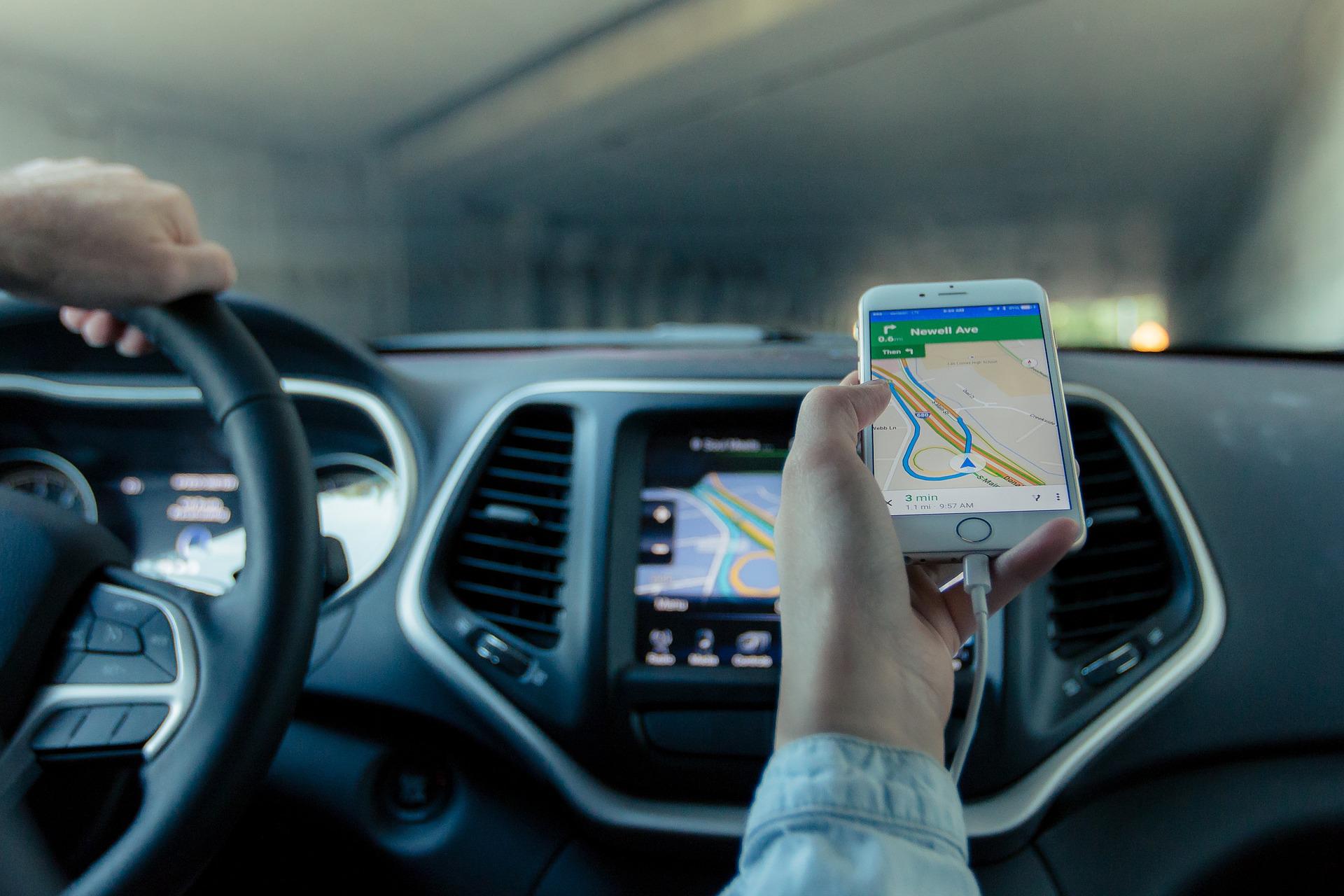
New vehicles have many AI-assisted applications Image: Foundry Co

It's not that students aren't already surrounded by artificial intelligence in their everyday lives, but they are probably unaware of its presence. That is no surprise since most of the adults around them are equally unaware of AI around them.

You find AI used in maps and navigation, facial recognition, text editors and autocorrect, search and recommendation algorithms, chatbots, and in social media apps. If you have a smartphone to a new car, you are using AI consciously or unconsciously. Consciously is preferred and a reason to educate about AI.

Though I have never thought of my time as a K-12 teacher as training students for jobs in the way that teaching in higher education clearly has that in mind, you can't ignore what students at lower level might need one day to prepare for job training in or out of higher ed. Artificial intelligence, data analytics, cloud computing, and cybersecurity are areas that always show up in reports about jobs now and in the near future.ed workers which means that we need to do more to prepare our students for these careers and others that will evolve over time.

“AI will dominate the workplace and to be successful, people are going to have to understand it,” said Mark Cuban, who launched a foundation in 2019 that provides AI bootcamps for free to students to learn about AI. It is his belief and the belief of other tech leaders and educators that artificial intelligence is something that should and can be taught at all levels, regardless of a teacher’s experience in this field.

One starting place might be Google AI Experiments which offers simple experiments to explore machine learning, through things like pictures, drawings, language, and music. See https://experiments.withgoogle.com/collection/ai

AIClub offers courses for students and free resources for educators including professional development sessions to spark curiosity for learning about AI. They are also developing guidelines for AI curriculum in grades K through 12.

I tried an AI test (it is rather long for younger students) at www.tidio.com/blog/ai-test/ that was part of a survey for a research study about AI-generated content. It shows you images, texts, and plays sounds and asks you to decide if you think they show real people or were created by humans or not. Almost all of us will be fooled by things created by AI. Another site is fun for kids as it shows very realistic AI-created cats that don't really exist. And another site at https://ai4k12.org/ is also a human vs AI activity where you decide whether art, music, writing or photos were created by a human or AI.

All of those examples can be used as a way to introduce students to how AI is used and even caution them to recognize that they can be not only helped but deceived using AI.